
Introduction
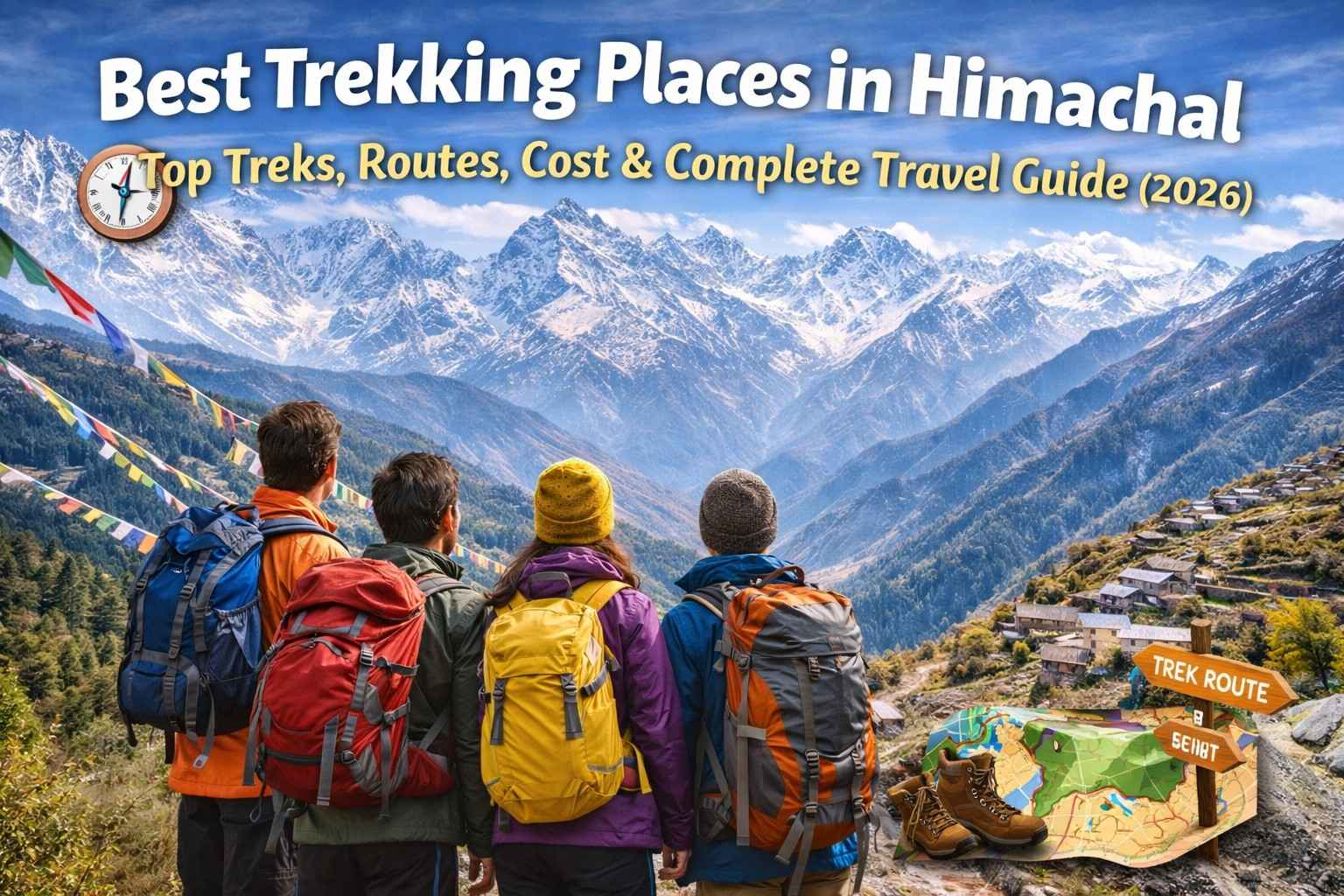
If you love mountains, adventure, and nature, trekking in Himachal Pradesh should definitely be on your bucket list. Located in the lap of the Himalayas, Himachal Pradesh offers some of the most scenic trekking trails in India. From lush green valleys and dense forests to snow-covered mountain passes and crystal-clear lakes, trekking in Himachal provides unforgettable experiences for both beginners and experienced trekkers.
Every year, thousands of travelers visit trekking hubs like Manali, Dharamshala, and Kasol to explore the breathtaking Himalayan trails. Whether you are looking for a short weekend trek or a challenging multi-day expedition, Himachal Pradesh offers a wide range of trekking options.
In this detailed guide, we will explore the best trekking places in Himachal, the best time to trek, difficulty levels, costs, travel tips, and a sample trekking itinerary.
Why Himachal is Best for Trekking
There are many reasons why Himachal Pradesh is considered one of the best trekking destinations in India.
1. Diverse Trekking Routes
Himachal offers trekking routes suitable for all types of trekkers. Beginners can try short treks, while experienced adventurers can attempt high-altitude mountain passes.
2. Stunning Natural Landscapes
Trekkers get to enjoy beautiful alpine meadows, snow-covered peaks, glaciers, waterfalls, and scenic valleys.
3. Rich Culture and Villages
Many trekking routes pass through traditional Himalayan villages where travelers can experience local culture and hospitality.
4. High-Altitude Lakes and Passes
Himachal is home to stunning lakes and high mountain passes that attract trekkers from around the world.
5. Easy Accessibility
Popular trekking destinations like Manali, Dharamshala, and Kasol are well connected by road and air.
Best Trekking Places in Himachal
Here are some of the most popular trekking destinations in Himachal Pradesh that every adventure lover should explore.
1. Triund Trek

The Triund Trek is one of the most popular and beginner-friendly treks in Himachal Pradesh. It starts from the vibrant hill town of McLeod Ganj, which is also known for Tibetan culture and monasteries.
Trek Details
- Distance: ~9 km (one way)
- Difficulty: Easy to moderate
- Best time: March–June and September–December
Highlights
- Stunning views of the Dhauladhar mountain range
- Panoramic scenery of the Kangra Valley
- Ideal camping location with beautiful sunsets
This trek is perfect for first-time trekkers or travelers with limited time.
2. Hampta Pass Trek

The Hampta Pass Trek is famous for its dramatic landscape changes. It connects the lush greenery of Kullu Valley with the stark, barren beauty of the Lahaul region.
Trek Details
- Distance: ~35 km
- Duration: 4–5 days
- Difficulty: Moderate
Highlights
- Crossing high mountain passes
- Beautiful alpine meadows and valleys
- Streams, glaciers, and dramatic Himalayan views
This trek is ideal for trekkers who want varied landscapes in a single adventure.
3. Kheerganga Trek

The Kheerganga Trek is one of the most popular trekking routes in the beautiful Parvati Valley.
Trek Details
- Starting point: Kasol
- Distance: ~12 km
- Difficulty: Easy to moderate
Highlights
- Natural hot water springs at the summit
- Scenic forest trails and waterfalls
- Camping under star-filled skies
The hot springs at the top make this trek relaxing and unique, attracting both adventure seekers and casual travelers.
4. Bhrigu Lake Trek
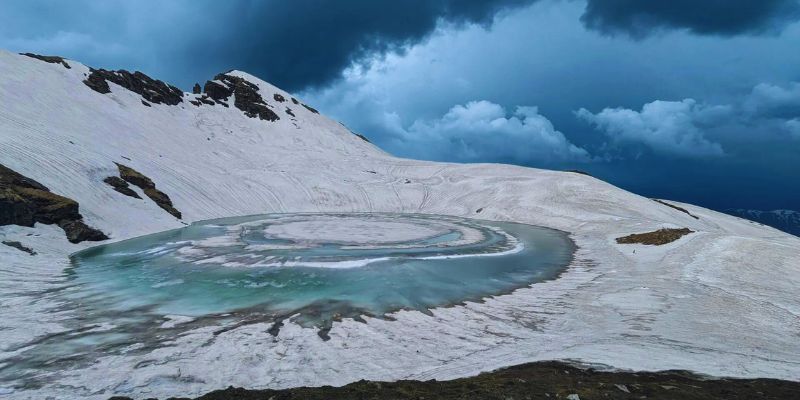
The Bhrigu Lake Trek is a beautiful high-altitude trek located near Manali.
Trek Details
- Distance: ~26 km
- Duration: 3–4 days
- Difficulty: Moderate
Highlights
- Vast alpine meadows resembling European landscapes
- Sacred high-altitude lake
- Stunning views of snow-covered Himalayan peaks
This trek is perfect for travelers who want a short but high-altitude trekking experience.
5. Pin Parvati Pass Trek
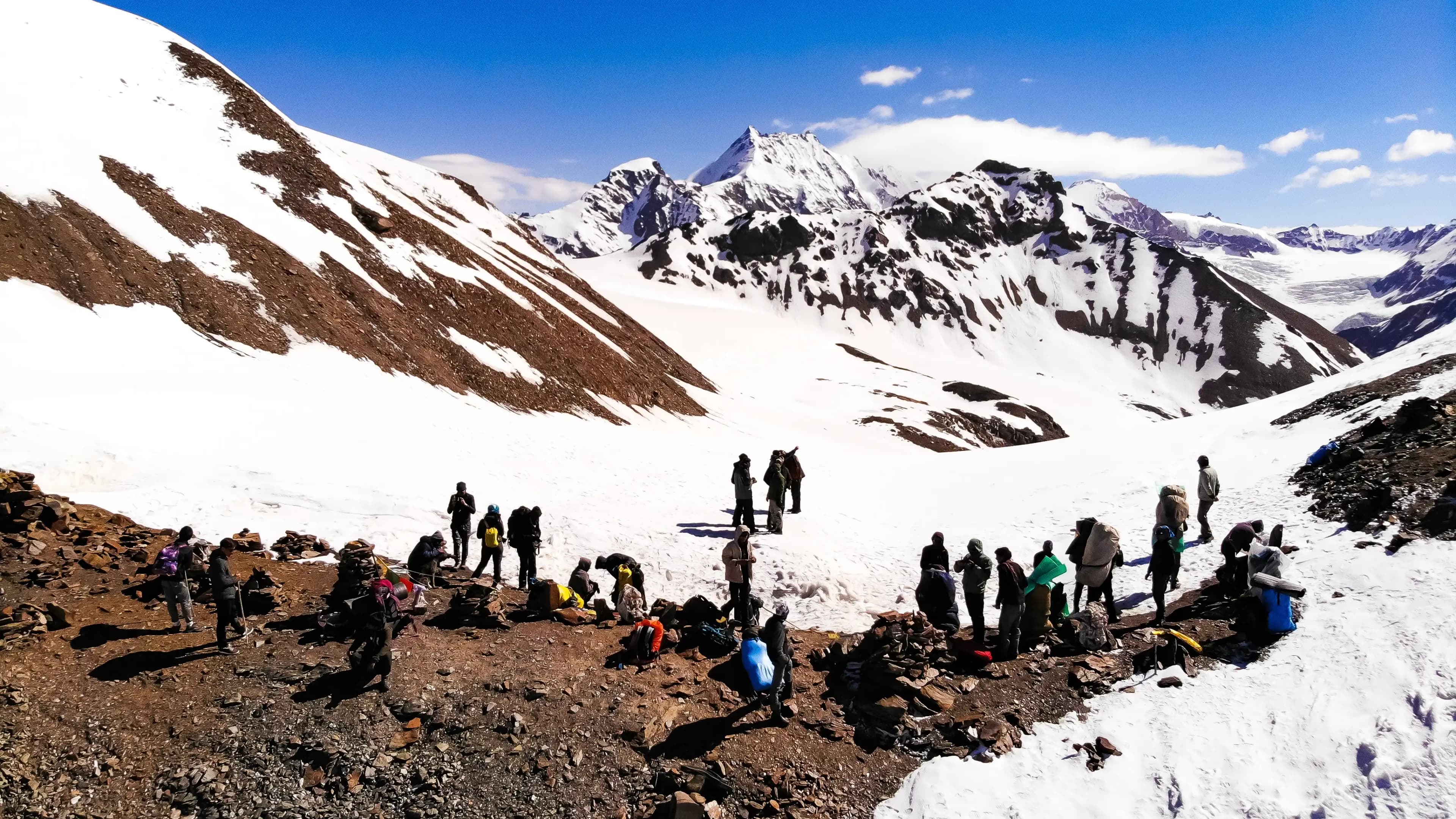
The Pin Parvati Pass Trek is one of the most challenging treks in Himachal. It connects the lush Parvati Valley to the cold desert region of Spiti Valley.
Trek Details
- Distance: ~110 km
- Duration: 9–11 days
- Difficulty: Difficult
Highlights
- Glacier crossings and snowfields
- Remote mountain villages
- Spectacular Himalayan scenery
Because of its length and altitude, this trek is recommended only for experienced trekkers.
6. Indrahar Pass Trek
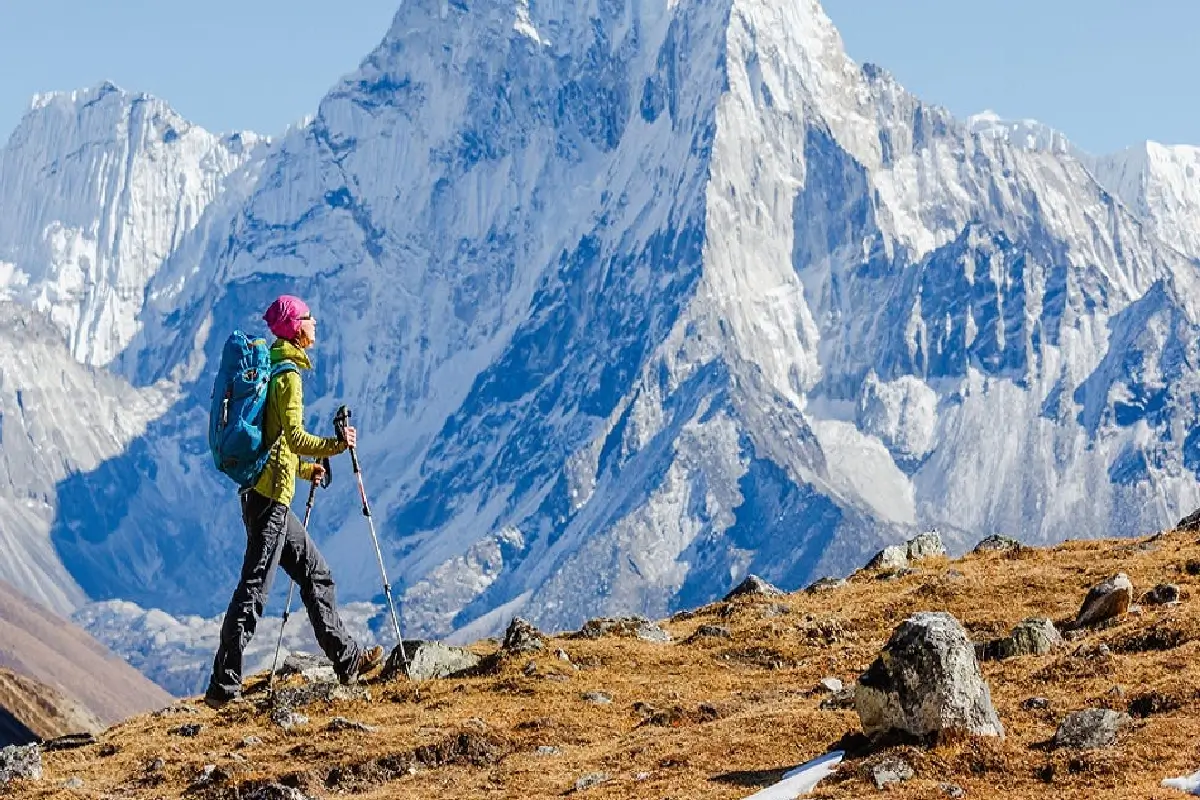
The Indrahar Pass Trek begins near Dharamshala and passes through scenic Himalayan landscapes.
Trek Details
- Distance: ~35 km
- Duration: 4–5 days
- Difficulty: Moderate
Highlights
- Rocky mountain trails
- Snow bridges and glaciers
- Magnificent views of the Pir Panjal range
It is a great option for trekkers who want a challenging but achievable Himalayan adventure.
✅ Summary
| Trek | Difficulty | Duration | Best For |
|---|---|---|---|
| Triund | Easy–Moderate | 1–2 days | Beginners |
| Hampta Pass | Moderate | 4–5 days | Scenic landscapes |
| Kheerganga | Easy–Moderate | 1–2 days | Hot springs & camping |
| Bhrigu Lake | Moderate | 3–4 days | High-altitude lake |
| Pin Parvati Pass | Difficult | 9–11 days | Experienced trekkers |
| Indrahar Pass | Moderate | 4–5 days | Mountain adventure |
Himachal Pradesh offers trekking experiences for every skill level, from easy scenic hikes to demanding high-altitude expeditions. Whether you are a beginner or an experienced trekker, these trails showcase the incredible beauty of the Himalayas.
Best Time for Trekking in Himachal
The best time to trek in Himachal Pradesh depends on the trekking route and weather conditions.
Summer Season (April – June)
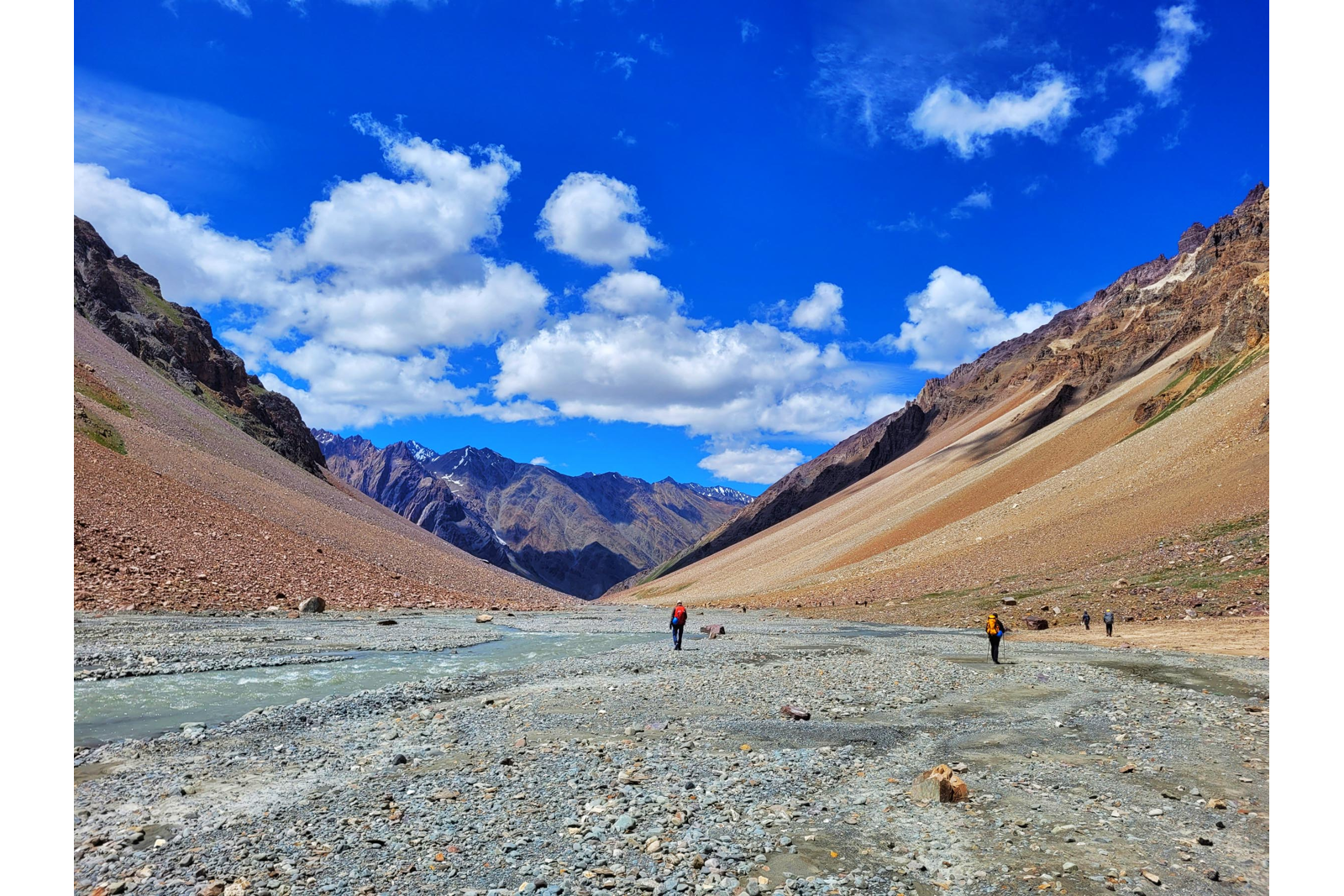
The summer season is the most popular time for trekking in Himachal Pradesh. After the winter snow melts, most trekking routes become accessible and the weather becomes pleasant.
Weather
- Temperature usually ranges from 10°C to 25°C
- Clear skies and comfortable daytime temperatures
Why it’s great for trekking
- Perfect weather for long hikes
- Trails are mostly snow-free and easier to walk
- Ideal season for beginner trekkers
Popular summer treks
- Triund Trek
- Hampta Pass Trek
- Bhrigu Lake Trek
This season is especially suitable for first-time trekkers and families who want a safe and comfortable trekking experience.
Monsoon Season (July – September)
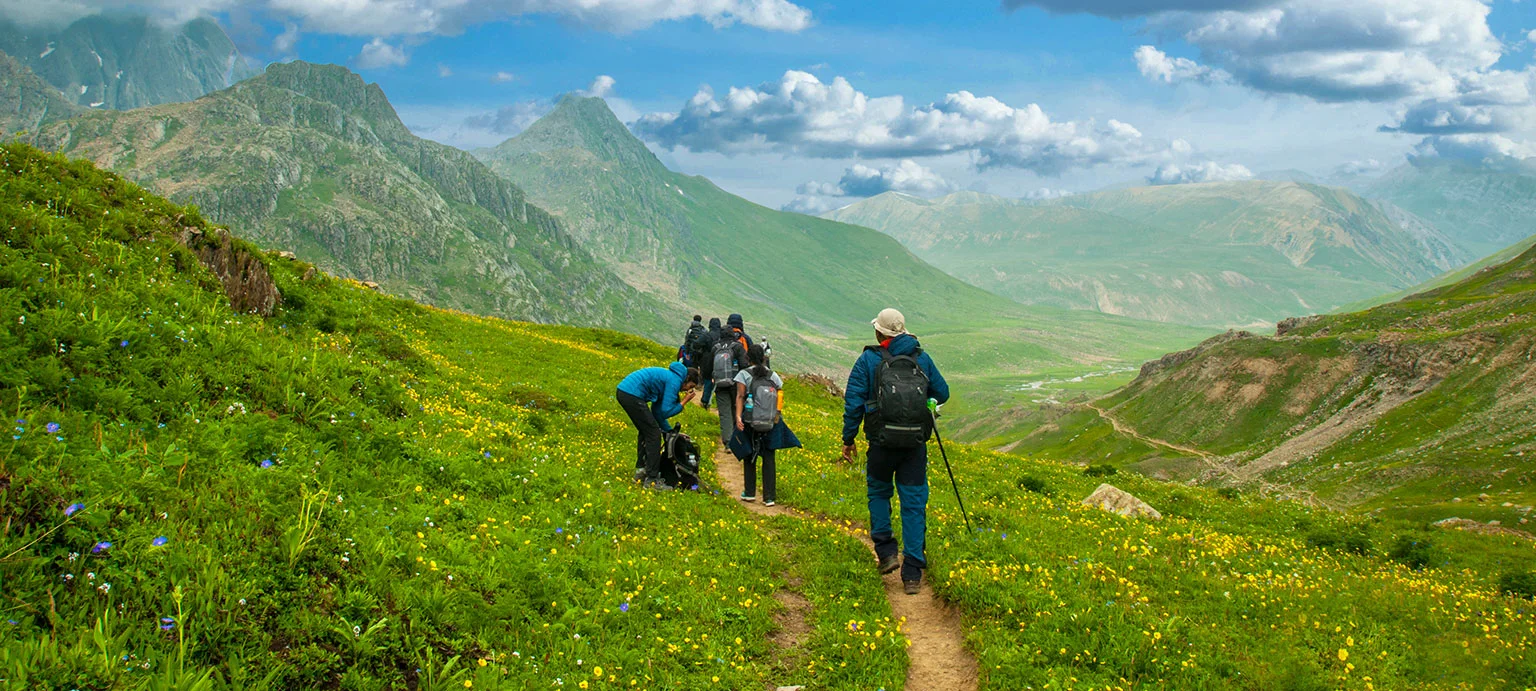
During the monsoon season, Himachal becomes incredibly green and scenic. Forests, valleys, and waterfalls look spectacular due to frequent rainfall.
Weather
- Temperatures around 12°C to 20°C
- Regular rain showers and cloudy skies
Advantages
- Lush green landscapes
- Beautiful waterfalls and rivers
- Fewer crowds on trekking routes
Challenges
- Slippery trails
- Possibility of landslides in some regions
- Limited visibility in foggy conditions
Because of these risks, monsoon trekking is recommended only for experienced trekkers or those trekking with guides.
Winter Season (December – February)
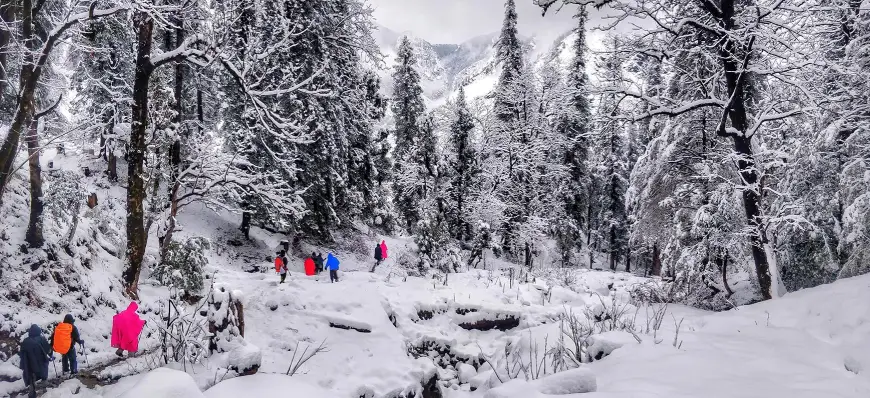
Winter transforms Himachal Pradesh into a snow-covered paradise. Many trekking routes become covered with snow, creating a completely different adventure.
Weather
- Temperatures can drop from -5°C to 10°C
- Heavy snowfall in high-altitude areas
Why trekkers love winter
- Stunning snowy landscapes
- Unique snow trekking experience
- Peaceful mountains with fewer tourists
Things to consider
- Requires proper winter gear
- Trails may be more difficult
- Some high-altitude passes may close due to heavy snow
Popular winter treks include Triund Snow Trek and Prashar Lake Trek.
✅ Summary
| Season | Temperature | Best For |
|---|---|---|
| April – June (Summer) | 10°C – 25°C | Best overall trekking season |
| July – September (Monsoon) | 12°C – 20°C | Green landscapes but risky trails |
| December – February (Winter) | -5°C – 10°C | Snow trekking adventure |
Overall:
- Best season for beginners: April – June
- Best for scenic greenery: July – September
- Best for snow trekking: December – February
Himachal Pradesh offers trekking opportunities throughout the year, but choosing the right season ensures a safe, comfortable, and unforgettable adventure in the Himalayas.
Trek Difficulty Levels in Himachal
Trekking routes in Himachal are categorized based on difficulty levels.
Beginner Treks
Beginner treks are ideal for people who are new to trekking or want a short adventure in the mountains. These treks usually have well-marked trails, shorter distances, and moderate altitude, making them easier to complete.
Characteristics
- Short trekking distance
- Gradual climbs
- Suitable for families and first-time trekkers
Examples
- Triund Trek – famous for its stunning views of the Dhauladhar Range
- Kheerganga Trek – known for its natural hot water springs and scenic forest trails
These treks are perfect for learning basic trekking skills and enjoying Himalayan landscapes without extreme difficulty.
Moderate Treks
Moderate treks require better physical fitness and some trekking experience. These trails often involve longer distances, steeper climbs, and higher altitudes.
Characteristics
- Multi-day trekking routes
- Changing terrain like meadows, streams, and rocky trails
- Higher altitude conditions
Examples
- Hampta Pass Trek – famous for its dramatic transition from lush valleys to barren mountains
- Bhrigu Lake Trek – known for its beautiful alpine meadows and sacred high-altitude lake
These treks are suitable for adventure lovers who want a more challenging Himalayan experience.
Difficult Treks
Difficult treks are designed for experienced trekkers who have good physical endurance and prior trekking experience. These routes often involve long durations, glacier crossings, and extreme altitude conditions.
Characteristics
- Long trekking distances
- High mountain passes and glaciers
- Remote and challenging terrain
Example
- Pin Parvati Pass Trek – one of the toughest treks in Himachal that connects the lush Parvati Valley to the cold desert of Spiti.
Because of the difficulty level, trekkers usually require proper gear, guides, and preparation before attempting such routes.
✅ Summary
| Difficulty Level | Best For | Example Treks |
|---|---|---|
| Beginner | First-time trekkers | Triund, Kheerganga |
| Moderate | Some trekking experience | Hampta Pass, Bhrigu Lake |
| Difficult | Experienced trekkers | Pin Parvati Pass |
Understanding trekking difficulty levels helps you choose the right trek based on your experience, fitness, and adventure goals, ensuring a safe and enjoyable journey in the Himalayas.
Trekking Cost in Himachal
The cost of trekking in Himachal depends on the trekking route, duration, and travel arrangements.
Average Trekking Costs
1. Short Treks (₹1,000 – ₹3,000)
Short treks usually take 1–2 days and are suitable for beginners.
Examples include the Triund Trek and Kheerganga Trek.
Typical expenses include:
- Local transport to the base village
- Entry or forest permits
- Simple food and tea at small mountain cafes
- Basic guesthouse or camping stay
These treks are often done without a guide, making them affordable.
2. Guided Treks (₹5,000 – ₹15,000)
Guided treks usually last 3–5 days and are organized by trekking companies.
Popular examples include:
- Hampta Pass Trek
- Bhrigu Lake Trek
The package price usually includes:
- Professional trek guide
- Camping equipment (tents, sleeping bags)
- Meals during the trek
- Permits and forest entry fees
- Support staff such as cooks or helpers
Guided treks are safer and more convenient, especially for first-time multi-day trekkers.
3. Expedition Treks (₹20,000 and above)
These are long and challenging treks that can last 7–12 days or more and require experienced trekkers.
Example: Pin Parvati Pass Trek
Higher costs are due to:
- Longer duration
- Technical terrain and high altitude
- Larger support teams
- Specialized gear and safety equipment
- Logistics like mule support and multiple camps
These treks are usually organized by professional trekking agencies.
What Most Trekking Packages Include
Most organized trekking packages in Himachal provide:
- Trek guide and support team
- Camping gear (tents, sleeping bags, mats)
- All meals during the trek
- Trek permits and entry fees
- Basic medical and safety support
✅ Tip: Traveling during the off-season or booking early can help you get lower prices on trekking packages.
How to Reach Himachal for Trekking
Traveling to Himachal Pradesh is easy due to good transportation connectivity.
Nearest Airports
- Kangra Airport
- Bhuntar Airport
Nearest Railway Station
The closest major railway station is:
- Pathankot Railway Station
From these locations, travelers can take buses or taxis to reach trekking destinations like Manali, Dharamshala, and Kasol.
Essential Trekking Gear – Explained
When trekking in the mountains, especially in a place like Himachal Pradesh, carrying the right gear is extremely important. Proper equipment helps ensure safety, comfort, and preparedness during long hikes and changing weather conditions. Here’s a detailed explanation of the essential trekking gear you should carry.
1. Trekking Shoes
Trekking shoes are one of the most important pieces of gear for any trek.
Why they are important:
- Provide strong grip on rocky, muddy, or snowy trails
- Protect your feet from injuries and blisters
- Offer ankle support during steep climbs and descents
Tip: Always choose water-resistant shoes with good traction and break them in before the trek.
2. Backpack
A good trekking backpack helps you carry all your essentials comfortably.
Features to look for:
- Capacity of 40–60 liters for multi-day treks
- Padded shoulder straps and waist belt for comfort
- Waterproof cover to protect your belongings
A well-organized backpack distributes weight evenly and reduces strain on your back.
3. Warm Clothes
Weather in the mountains can change quickly, especially at higher altitudes.
Essential warm clothing includes:
- Thermal innerwear
- Fleece jacket
- Down jacket or insulated jacket
- Gloves and woolen cap
Layering clothes helps regulate body temperature and keeps you warm.
4. Rain Jacket
Unexpected rain showers are common in the mountains.
Why you need it:
- Protects you from rain and wind
- Keeps your clothes dry
- Prevents body temperature from dropping
Choose a lightweight, waterproof jacket that is easy to pack.
5. Sleeping Bag
For multi-day treks or camping trips, a sleeping bag is essential.
Benefits:
- Keeps you warm during cold nights
- Provides comfortable sleep in tents
- Designed for different temperature ratings
Always pick a sleeping bag suitable for the expected mountain temperature.
6. Trekking Poles
Trekking poles are very useful for maintaining balance on uneven trails.
Advantages:
- Reduce pressure on knees and joints
- Improve stability on steep climbs and descents
- Help maintain a steady walking rhythm
They are especially helpful during long or high-altitude treks.
7. First Aid Kit
A small first aid kit is crucial for dealing with minor injuries.
It should include:
- Bandages and antiseptic cream
- Pain relief tablets
- Blister patches
- Personal medications
Having basic medical supplies can prevent small problems from becoming serious.
8. Water Bottle
Staying hydrated during trekking is extremely important.
Tips:
- Carry at least 1–2 liters of water
- Use insulated bottles in cold weather
- You can also carry water purification tablets for mountain streams
Proper hydration helps maintain energy levels and stamina.
✅ Conclusion:
Carrying the right trekking gear makes your adventure safer, more comfortable, and more enjoyable. Whether you’re attempting an easy trek like Triund or a challenging one like Pin Parvati Pass, proper preparation and equipment are key to a successful trekking experience.
Carrying the right equipment ensures comfort and safety during the trek.
Safety Tips for Trekking
Trekking in the mountains can be challenging, so safety should always be a priority.
Follow these tips:
- Check the weather forecast before trekking
- Carry enough food and water
- Hire a local guide if you are unfamiliar with the trail
- Avoid trekking alone in remote areas
- Inform someone about your trekking plan
Sample 5-Day Trekking Itinerary
This 5-day trekking plan is designed especially for beginners who want to experience the beauty of the Himalayas while keeping the trek manageable and enjoyable. It allows time for preparation, gradual trekking, exploration, and safe return.
Day 1: Arrival in Manali and Trek Preparation
On the first day, trekkers arrive in Manali, which is a popular base town for many Himalayan treks.
Activities on this day:
- Check in to your hotel or trekking camp
- Meet the trekking guide or group members
- Check trekking gear and equipment
- Attend a briefing session about the trek route, safety rules, and weather conditions
- Spend the evening exploring the local market or resting
This day is important for acclimatization, allowing your body to adjust to the mountain environment.
Day 2: Start the Trek and Reach the First Campsite
The actual trekking journey begins on the second day.
What happens on this day:
- Travel to the trek starting point early in the morning
- Begin hiking through forests, small villages, and scenic trails
- Enjoy views of rivers, valleys, and mountain landscapes
- Reach the first campsite by afternoon or evening
Trekkers usually rest, enjoy a warm meal, and spend the night in tents under the stars.
Day 3: Trek Through Mountain Trails and Valleys
Day 3 is usually the most exciting part of the trek.
Experiences during this stage:
- Trek through alpine meadows and mountain paths
- Cross small streams or wooden bridges
- See beautiful snow-covered peaks and wide valleys
- Reach the next campsite at a higher altitude
This day helps trekkers experience the true beauty of the Himalayan landscape.
Day 4: Reach the Summit or Lake
This is the highlight of the trekking journey.
Trekkers hike toward the final destination, which could be:
- A mountain summit
- A high-altitude lake
- A mountain pass
What makes this day special:
- Spectacular panoramic views
- Amazing photography opportunities
- A sense of achievement after reaching the top
Trekkers usually spend time enjoying the scenery before returning to the campsite.
Day 5: Descend and Return to Base Location
The final day involves trekking back down to the base village or road point.
Activities include:
- Descending through the same or alternate trail
- Enjoying the last views of forests and valleys
- Reaching the base location by afternoon
- Traveling back to Manali or nearby towns
This marks the completion of the trekking adventure.
✅ Conclusion
This simple 5-day trekking plan allows beginners to:
- Adjust gradually to mountain conditions
- Enjoy scenic Himalayan landscapes
- Experience camping and outdoor adventure safely
It’s a perfect introduction to Himachal trekking for first-time trekkers.
FAQs About Trekking in Himachal
Which is the best trek in Himachal Pradesh?
Some of the best treks include Triund Trek, Hampta Pass Trek, and Bhrigu Lake Trek.
Is Himachal good for beginner trekkers?
Yes, Himachal offers several beginner-friendly trekking routes like Triund and Kheerganga.
What is the easiest trek in Himachal?
The Triund Trek is considered one of the easiest and most popular treks.
Which month is best for trekking in Himachal?
The best months are April to June and September to October.
How much does trekking cost in Himachal?
Short treks can cost around ₹1,000 to ₹3,000, while longer guided treks may cost ₹15,000 or more.
Conclusion
Exploring the best trekking places in Himachal is an unforgettable adventure for nature lovers and thrill seekers. With breathtaking landscapes, high-altitude lakes, and scenic mountain trails, Himachal Pradesh remains one of the top trekking destinations in India.
Whether you are trekking to Triund Trek for a weekend adventure or attempting a challenging expedition like Pin Parvati Pass Trek, the experience of walking through the Himalayas will stay with you for a lifetime.
If you love adventure and nature, trekking in Himachal Pradesh should definitely be part of your travel plans.