rk@indtour.in.com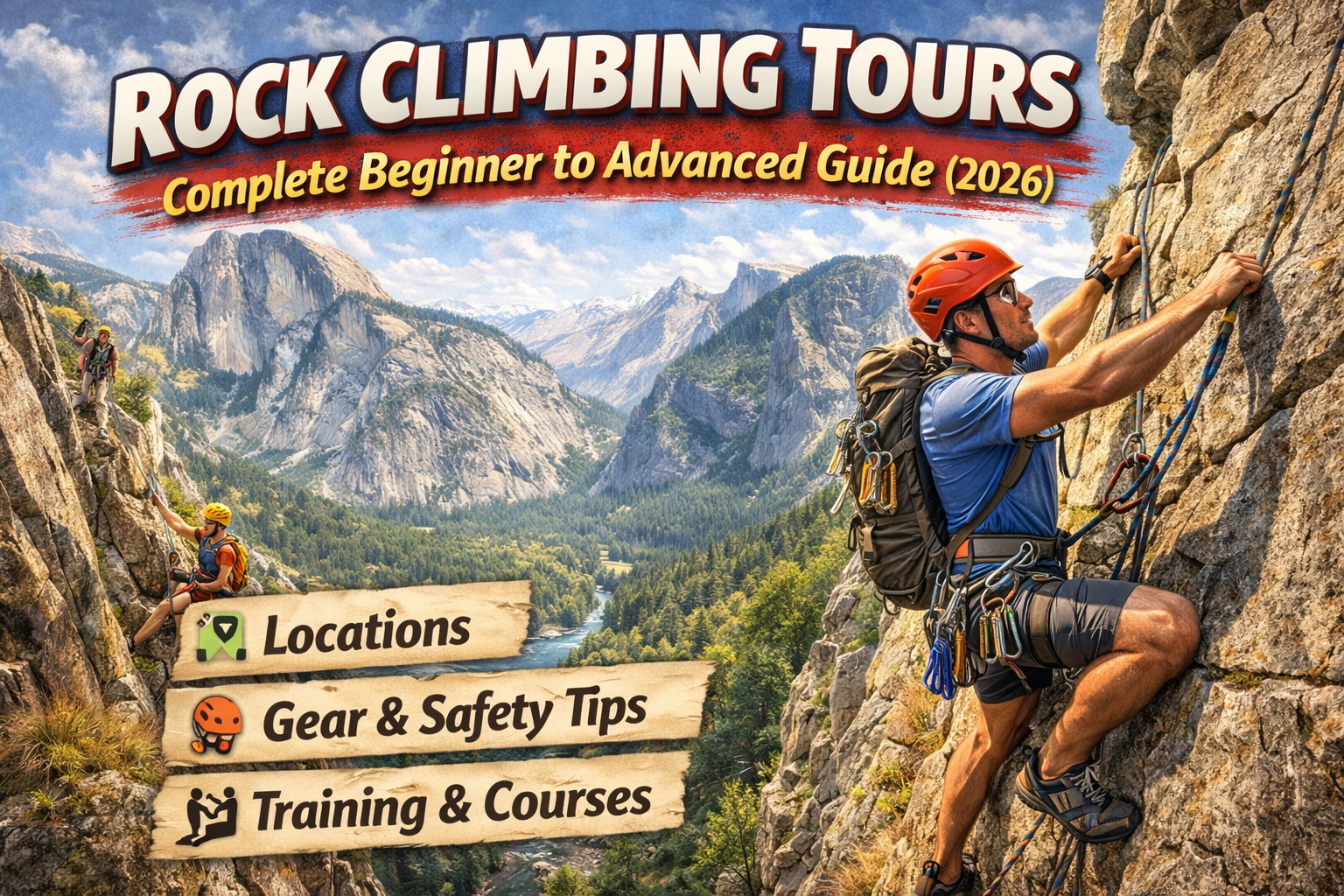
Introduction
Rock climbing is more than just a sport. It’s a physical challenge, a mental exercise, and a powerful way to connect with nature. But for beginners and even intermediate climbers, heading outdoors without proper guidance can feel overwhelming. That’s where rock climbing tours come in.
Guided climbing experiences provide professional instruction, certified safety systems, and access to carefully selected climbing routes. Whether you’re trying climbing for the first time, planning a corporate team-building activity, or seeking advanced outdoor routes, organized tours offer structure and safety.
This complete 2026 guide covers everything in one place: types of tours, best destinations, pricing, difficulty levels, safety standards, what to wear, booking tips, and expert advice. By the end of this article, you’ll know exactly how to choose the right climbing tour for your skill level and goals.
What Are Rock Climbing Tours? (Quick Answer)
Rock climbing tours are guided climbing experiences led by certified instructors who provide safety equipment, training, and supervised access to climbing routes suitable for different skill levels. They are designed for beginners, families, corporate groups, and experienced climbers who want expert guidance and safe outdoor access.
Types of Rock Climbing Tours
Understanding the different formats helps you choose wisely.
1. Outdoor Rock Climbing Tours
These take place on natural rock formations such as cliffs, canyons, and mountains. They offer real rock textures and scenic views.
Best for: Adventure travelers and outdoor enthusiasts.
2. Indoor Climbing Tours
Conducted in climbing gyms, these tours are ideal for beginners learning basic techniques before heading outdoors.
Best for: First-time climbers and training sessions.
3. Multi-Day Climbing Expeditions
These tours combine climbing with camping or lodge stays. Participants tackle multiple routes over several days.
Best for: Intermediate to advanced climbers.
4. Private Guided Climbs
A personalized climbing experience with one-on-one instruction.
Best for: Skill development and special occasions.
5. Group Adventure Tours
Organized climbing sessions for corporate teams, families, or friends.
Best for: Team-building and social adventure.
Best Rock Climbing Destinations (USA & International)
Location matters when booking rock climbing tours. Here are some well-known climbing areas:
Yosemite National Park
Overview
Known worldwide for granite walls and historic climbing routes.
Skill Level
Intermediate to advanced.
Best Season
Spring and Fall.
Why It’s Unique
Home to iconic big-wall climbs and scenic valleys.
Official park updates are available via the National Park Service website.
Red River Gorge
Overview
Popular for sport climbing and beginner-friendly routes.
Skill Level
Beginner to advanced.
Best Season
Spring and Fall.
Why It’s Unique
Overhanging sandstone cliffs with a variety of grades.
Joshua Tree National Park
Overview
Famous desert climbing destination.
Skill Level
Beginner to intermediate.
Best Season
Fall through early Spring.
Why It’s Unique
Short routes, crack climbing, and clear desert skies.
Moab
Overview
Offers sandstone towers and desert scenery.
Skill Level
Intermediate to advanced.
Best Season
Spring and Fall.
Chamonix
Overview
A global mountaineering hub in the Alps.
Skill Level
Advanced and alpine climbers.
Best Season
Summer.
Difficulty Levels Explained
Climbing routes are graded to reflect difficulty.
Beginner (5.4–5.6)
- Larger handholds
- Easier foot placement
- Ideal for first-timers
Intermediate (5.7–5.10)
- Smaller holds
- More technical movements
Advanced (5.11+)
- Strong finger strength required
- Complex body positioning
Always choose a level that matches your current ability.
What’s Included in Rock Climbing Tours (Detailed Guide)
Rock climbing tours are an exciting way to experience vertical adventure, whether you are a beginner or an experienced climber. Most professional tours provide everything you need for a safe, guided, and enjoyable climbing experience. Here’s a detailed look at what is typically included:
1. Certified Guide
Why it’s important:
- Certified guides ensure your safety and provide expert supervision throughout the climb.
- They know the terrain, climbing routes, and local hazards.
- Guides can adapt the difficulty of climbs to match your skill level.
What to expect:
- Experienced instructors with certifications such as AMGA (American Mountain Guides Association)
- Step-by-step guidance on climbing technique
- Assistance during challenging sections
A certified guide can turn a potentially risky adventure into a safe and educational experience.
2. Helmet and Harness
Why it’s important:
- Helmets protect your head from falling debris or accidental bumps against the rock face.
- Harnesses are essential for securing yourself to the rope and climbing system.
What to expect:
- Properly fitted helmet that doesn’t slip or obstruct vision
- Adjustable harness for waist and leg support
- Gear checked by the guide before every climb
Wearing the right protective equipment is non-negotiable in rock climbing safety.
3. Ropes and Belay Devices
Why it’s important:
- Ropes provide safety during ascents and descents.
- Belay devices control rope tension and prevent falls.
What to expect:
- Dynamic climbing ropes designed to absorb impact
- Belay devices for controlled climbing and rappelling
- Carabiners and anchors to secure the rope system
Proper rope management ensures a secure climbing experience even on steep or challenging routes.
4. Safety Briefing
Why it’s important:
- Before climbing, guides provide a comprehensive safety briefing.
- This helps participants understand risks and learn how to minimize them.
What’s typically covered:
- How to wear and adjust your harness and helmet
- Basic climbing techniques and hand/foot placement
- Commands and communication used during the climb
- Emergency procedures
Safety briefings reduce the risk of accidents and build confidence for beginners.
5. Route Planning
Why it’s important:
- Not all climbing routes are suitable for all skill levels.
- Guides select routes based on your experience, group size, and weather conditions.
What to expect:
- Clear information on route difficulty and length
- Options for beginner, intermediate, or advanced climbs
- Adjustments in real time depending on safety or weather
Proper route planning ensures a fun, challenging, and safe climbing experience.
6. Basic Climbing Instruction
Why it’s important:
- Beginners may not know proper climbing techniques or rope handling.
- Instruction helps you climb efficiently and safely.
What’s typically included:
- How to tie basic knots
- How to use a belay device
- Footwork and hand placement tips
- How to descend safely (rappelling)
Even experienced climbers often benefit from guides’ tips for better technique and efficiency.
Some companies also include climbing shoes.
Cost of Rock Climbing Tours (2026)
Pricing varies based on duration and location.
Typical Costs
- Half-Day Tour: $100–$180
- Full-Day Tour: $180–$350
- Multi-Day Expedition: $500–$2000+
What Affects Price?
- Private vs group tour
- Location permits
- Equipment rental
- Guide-to-client ratio
Avoid choosing solely based on the lowest price. Safety and guide experience matter more.
Safety Standards & Certifications in Rock Climbing (Detailed Guide)
Safety is the most important aspect of rock climbing. Professional climbing tours and guided trips follow strict safety standards to ensure every participant can enjoy the experience without unnecessary risk. Here’s a detailed explanation of the key safety standards and measures.
1. Certified Professional Guides
Professional climbing guides are often certified by organizations such as the
American Mountain Guides Association (AMGA), which is the gold standard for climbing instruction in the United States.
Why certification matters:
- Certified guides undergo rigorous training in climbing techniques, rescue operations, and risk management.
- They have demonstrated knowledge of proper equipment use, anchor setup, and emergency procedures.
- Certification ensures guides meet a consistent safety standard, which protects participants of all experience levels.
What AMGA certification includes:
- Technical climbing skills
- Rope management and belaying techniques
- Risk assessment and decision-making
- Rescue techniques for injured or stranded climbers
Having a certified guide reduces accidents and increases confidence for first-time climbers.
2. Equipment Inspections
Proper equipment is critical to climbing safety.
Guides inspect all climbing gear before every trip to ensure it meets safety standards.
Key inspections include:
- Ropes: Check for fraying, wear, or damage that could reduce strength.
- Harnesses: Ensure straps, buckles, and stitching are intact and properly sized.
- Carabiners & Belay Devices: Confirm smooth operation and no cracks or deformities.
- Helmets: Inspect for cracks, secure straps, and proper fit.
Regular inspections prevent equipment failure and are a core part of professional climbing safety standards.
3. Proper Anchor Systems
Anchors are the foundation of climbing safety. They secure the rope to the rock face and prevent falls.
Professional measures include:
- Redundant anchor systems: Two or more points of attachment for added safety.
- Anchor inspection: Guides check the stability of bolts, cams, and natural anchors before climbing.
- Load testing: Ensuring anchors can hold the weight of climbers under dynamic conditions.
A properly set anchor system significantly reduces risk during climbs and rappelling.
4. Clear Communication Signals
Effective communication between guides and climbers is essential, especially in noisy or high-stress environments.
Typical communication measures:
- Standard verbal commands: “Climb,” “Take,” “Belay on,” “Off belay”
- Hand signals for situations where verbal communication is difficult
- Pre-climb briefings to ensure everyone understands instructions
Clear communication prevents misunderstandings that can lead to accidents.
5. Emergency Response Training
Even with precautions, accidents can happen. Professional guides are trained to respond quickly and effectively.
Training includes:
- First aid and CPR certification
- Swiftwater or wilderness rescue techniques (if near rivers or remote areas)
- Evacuation procedures for injured climbers
- Emergency signaling to alert other climbers or rescue teams
Emergency preparedness ensures that participants are protected even in unexpected situations.
Always confirm that your guide is certified and insured.
Best Time for Rock Climbing Tours (Detailed Guide)
Timing your rock climbing trip is crucial for safety, comfort, and enjoyment. Different seasons bring unique conditions that affect climbing routes, temperature, and accessibility. Here’s a detailed guide for each season in the United States.
1. Spring (March–May)
Why it’s a great time:
- Temperatures are mild across most climbing areas.
- Snow is melting in mountainous regions, making low and mid-elevation climbs accessible.
- Nature is vibrant — wildflowers, rivers, and canyons are at their peak beauty.
Tips for spring climbing:
- Check for snowmelt or runoff in rivers if climbing near water.
- Bring layers: mornings and evenings can still be chilly.
- Avoid regions prone to spring storms.
Best locations:
- Yosemite Valley (California)
- Red River Gorge (Kentucky)
Spring offers a balanced experience for both beginners and intermediate climbers.
2. Summer (June–August)
Why it’s a great time:
- Ideal for high-altitude climbing in mountainous areas.
- Long daylight hours allow for extended climbing sessions.
- Many guided tours operate at full capacity.
Tips for summer climbing:
- Stay hydrated — heat can be intense at lower elevations.
- Wear sun protection: sunscreen, sunglasses, and hats.
- Early morning climbs are best to avoid afternoon heat or thunderstorms.
Best locations:
- Rocky Mountains (Colorado)
- Tetons (Wyoming)
Summer is perfect for experienced climbers seeking challenging, high-altitude routes.
3. Fall (September–November)
Why it’s a great time:
- Moderate temperatures and dry conditions make it ideal for desert and canyon climbing.
- Fewer crowds compared to summer, providing a more peaceful experience.
- Colorful autumn scenery adds to the adventure.
Tips for fall climbing:
- Check for early snowfall at higher elevations.
- Bring layers — mornings and evenings may be cool.
- Popular for multi-pitch climbs in desert areas.
Best locations:
- Joshua Tree National Park (California)
- Red Rock Canyon (Nevada)
Fall is perfect for climbers who enjoy scenic desert and canyon adventures.
4. Winter (December–February)
Why it’s a great time:
- Winter is popular for desert climbing regions where temperatures remain mild.
- Fewer crowds make it easier to book guided tours and get permits.
- Ideal for climbers looking to escape cold northern climates.
Tips for winter climbing:
- Avoid high-altitude routes where snow and ice are present unless you’re experienced.
- Dress in layers and bring warm gloves.
- Check road access — some parks may close for snow.
Best locations:
- Joshua Tree National Park (California)
- Sedona (Arizona)
Winter is best suited for desert and low-elevation climbing.
Important Note: Check Weather Forecasts Before Booking
No matter the season:
- Always check local weather conditions before your climbing trip.
- Rain, snow, or extreme heat can make climbs dangerous.
- Adjust your plans if forecasts predict storms, flash floods, or strong winds.
Key Takeaways
| Season | Best For | Tips |
|---|---|---|
| Spring | Mild temperatures, low to mid-elevation climbs | Layer clothing, watch for runoff |
| Summer | High-altitude climbing, long daylight | Hydrate, avoid afternoon storms |
| Fall | Desert and canyon climbing | Cool mornings/evenings, fewer crowds |
| Winter | Desert climbing, mild regions | Dress warmly, check access |
Who Should Try Rock Climbing Tours?
Rock climbing tours are suitable for:
- Beginners
- Families with older children
- Corporate teams
- Adventure travelers
Not ideal for:
- Individuals with severe joint injuries
- Those with extreme fear of heights
- People with certain medical conditions
Consult a healthcare professional if unsure.
What to Wear & Bring
Recommended Clothing
- Flexible athletic wear
- Breathable layers
- Climbing shoes (if not provided)
Bring
- Sunscreen
- Water bottle
- Light snacks
Avoid
- Loose jewelry
- Very baggy clothing
What to Expect on a Climbing Tour
- Arrival and registration
- Safety orientation
- Gear fitting
- Knot and belay practice
- Supervised climb
- Review and feedback session
Most tours last 3–6 hours.
Multi-Day Climbing Expeditions
Multi-day climbing tours combine outdoor adventure with camping or lodging.
Benefits
- Skill improvement
- Access to remote climbing areas
- Deeper outdoor experience
Preparation Needed
- Good physical fitness
- Endurance training
- Basic climbing experience
Indoor vs Outdoor Rock Climbing Tours
| Feature | Indoor | Outdoor |
|---|---|---|
| Weather Impact | No | Yes |
| Skill Level | Beginner-friendly | Varies |
| Risk Level | Controlled | Natural hazards |
| Experience | Predictable | Scenic & variable |
Indoor tours are ideal for beginners building confidence.
Environmental Responsibility
Climbing areas are often located in protected lands. Follow Leave No Trace principles and respect regulations set by the National Park Service.
Responsible Practices
- Pack out trash
- Avoid damaging rock surfaces
- Respect wildlife
- Stay on marked trails
Booking Tips for Rock Climbing Tours
- Book during shoulder seasons for better availability
- Verify guide certification
- Ask about group size
- Read reviews carefully
- Confirm cancellation policies
Planning ahead ensures a smoother experience.
Expert Tip: Prepare Before Your Climb
Build upper body and core strength before your trip. Simple exercises like pull-ups, planks, and grip training can improve performance. Practicing at an indoor climbing gym can also boost confidence before your outdoor climb.
Real-World Use Cases
Beginner Couple
A couple with no prior experience books a half-day guided climbing session at Red River Gorge to learn basics safely.
Corporate Team
A company organizes a group climbing tour in Moab for leadership and teamwork development.
Solo Traveler
An experienced climber joins a multi-day expedition in Chamonix to challenge technical alpine routes.
Frequently Asked Questions
1. Are rock climbing tours safe for beginners?
Yes, when led by certified guides who provide training and safety equipment.
2. Do I need prior experience?
No. Many tours are designed specifically for beginners.
3. How fit do I need to be?
Moderate fitness helps, but beginners can start on easy routes.
4. What is the minimum age?
Most tours accept children aged 8–12 and older, depending on location.
5. How long does a climbing tour last?
Half-day tours last 3–4 hours, while full-day tours can last 6–8 hours.
6. Are guides certified?
Reputable companies employ certified professionals, often through AMGA.
Internal Linking Suggestions
To enhance your website’s SEO, link this article to:
- Adventure travel gear guide
- Hiking safety tips
- Best national parks in the USA
- Outdoor fitness preparation guide
Conclusion
Rock climbing tours provide a structured and safe way to experience one of the world’s most exciting outdoor activities. With certified guides, professional equipment, and carefully selected routes, they make climbing accessible for beginners while still offering challenges for advanced climbers.
Before booking, consider your skill level, preferred destination, season, and budget. Verify certifications, read reviews, and prepare physically for the experience.
Whether you choose granite walls in Yosemite, sandstone cliffs in Red River Gorge, or desert towers in Moab, guided climbing can be a rewarding way to build confidence, strength, and outdoor skills.
If you’re ready to take the next step, research destinations, choose certified guides, and start preparing for your climbing adventure safely and responsibly.
For more detailed outdoor adventure guides, explore our related travel and gear articles to plan your next experience with confidence.