rk@indtour.in.com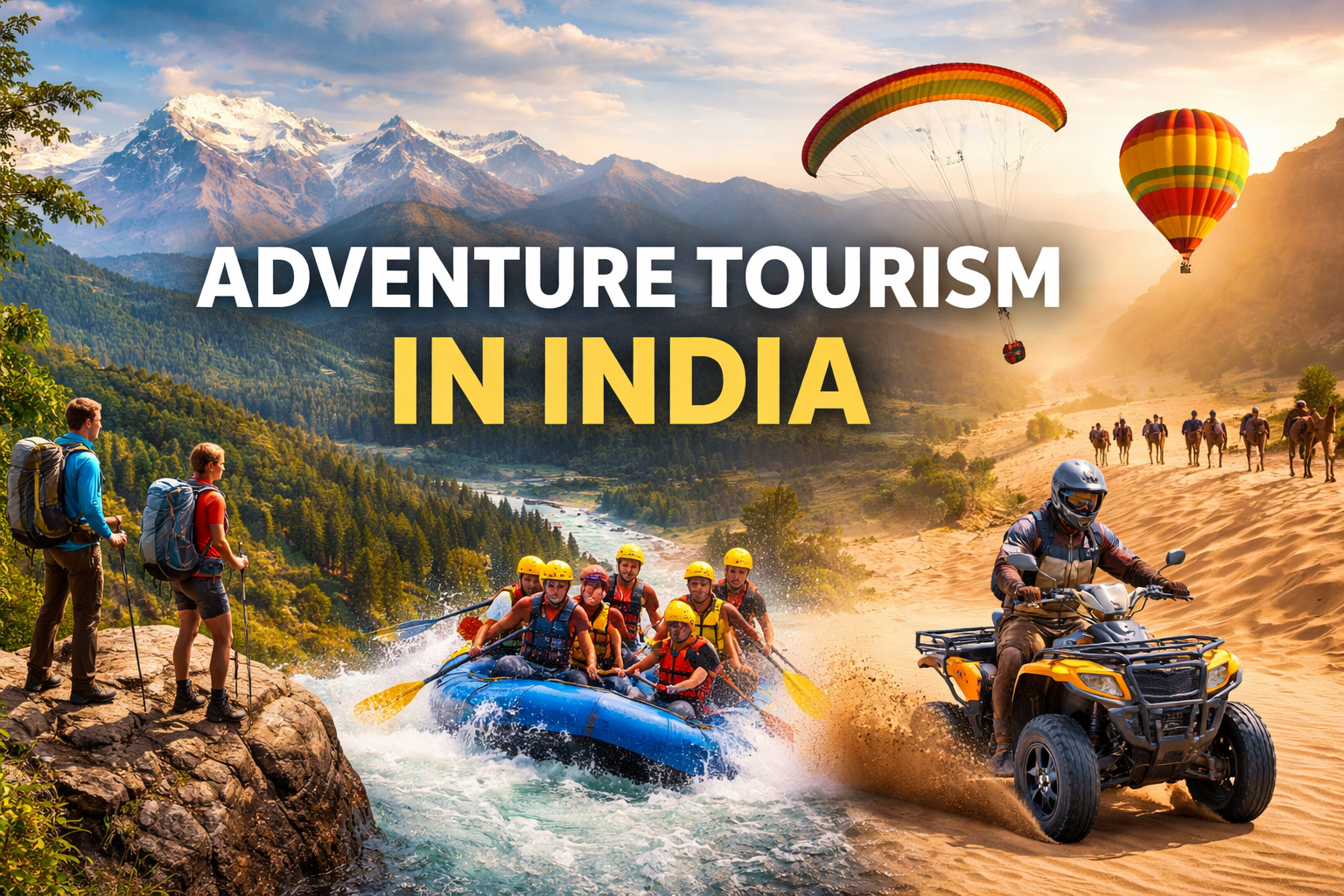
Adventure tourism in India has grown rapidly over the last decade, becoming one of the most exciting and diverse travel segments in the country. India’s geographical variety, spanning the Himalayas, vast coastlines, dense forests, mighty rivers, deserts, and volcanic islands, makes it a perfect destination for adventure lovers. Travelers today look for thrill, challenges, nature-based exploration, cultural interaction, and memorable outdoor experiences, and India offers endless options across all seasons and skill levels.
This comprehensive guide covers everything readers need to know about adventure tourism in India, including the types of adventures available, the best destinations, ideal seasons, safety tips, budgets, gear recommendations, sustainability practices, and expert vs. beginner-friendly options. Whether someone wants trekking, rafting, scuba diving, paragliding, or desert adventure, this article helps them discover the best adventure experiences in India.
1. Introduction to Adventure Tourism in India
Adventure tourism refers to travel that involves exploring new places while engaging in physically and mentally thrilling activities. India, with its rich natural landscapes, offers unparalleled opportunities for adventure, making it one of the top global destinations for thrill seekers.
Points to cover:
- India offers mountains, forests, deserts, beaches, islands, rivers, backwaters, and wildlife reserves suitable for adventure.
- Increasing interest among youth and working professionals has boosted domestic adventure travel.
- Government initiatives, improved connectivity, and certified adventure operators have made adventure tourism safer.
- India offers both budget-friendly and premium adventure experiences.
- Activities are available for solo travelers, families, couples, and groups.
2. Types of Adventure Activities in India
India offers land-based, water-based, and air-based adventure activities. Each category includes experiences for beginners, intermediates, and professionals.
Land-Based Adventure Activities
- Trekking
- Hiking
- Camping
- Mountaineering
- Peak climbing
- Rock climbing
- Mountain biking
- Off-roading and jeep safaris
- Desert camping
- Wildlife safaris
- Cave exploration
- Jungle expeditions
- Snow trekking and snowshoeing
- Skiing and snowboarding (winter season)
Water-Based Adventure Activities
- River rafting
- Kayaking
- Canoeing
- Scuba diving
- Snorkeling
- Surfing
- Stand-up paddleboarding
- Jet skiing
- Parasailing
- Fishing and angling expeditions
- Waterfall rappelling
- White-water kayaking
- Island hopping via speedboats
Air-Based Adventure Activities
- Paragliding
- Hot air ballooning
- Skydiving
- Bungee jumping
- Ziplining
- Aerial rope courses
- Helicopter tours
- Paramotoring
3. Top Adventure Destinations in India
India has adventure destinations categorized into mountains, water activities, deserts, forests, and islands. Each offers unique landscapes and activities.
Mountain and Trekking Destinations
- Himachal Pradesh: Manali, Spiti Valley, Kullu, Dharamshala, Bir Billing, Tirthan Valley
- Uttarakhand: Rishikesh, Auli, Kedarkantha, Valley of Flowers, Har Ki Dun, Chopta
- Jammu & Kashmir: Gulmarg, Pahalgam, Sonmarg, Ladakh, Nubra Valley, Zanskar
- Sikkim: Goechala Trek, North Sikkim, Yuksom
- Arunachal Pradesh: Tawang, Ziro Valley, Mechuka
Water and Coastal Adventure Destinations
- Goa: Scuba diving, snorkeling, parasailing, water sports
- Andaman and Nicobar Islands: Havelock Island, Neil Island, underwater diving and sea walking
- Lakshadweep: Agatti Island, Bangaram Island for diving and kayaking
- Kerala: Backwaters, Varkala, Kovalam
- Karnataka: Gokarna, Murudeshwar for diving
- Rishikesh: River rafting and kayaking on the Ganga
Desert and Off-Road Destinations
- Rajasthan: Jaisalmer, Bikaner, Pushkar for desert safaris, dune bashing, camel rides
- Gujarat: Rann of Kutch for jeep safari and camping
- Ladakh: Off-roading, motorcycle expeditions, camping in cold desert regions
Forest and Wildlife Adventure Destinations
- Jim Corbett National Park
- Kanha National Park
- Bandhavgarh National Park
- Ranthambore National Park
- Kaziranga National Park
- Sundarbans National Park
- Wayanad Wildlife Sanctuary
- Periyar Wildlife Sanctuary
- Gir National Park
Unique Island and Volcanic Adventure Destinations
- Barren Island (Andaman) for diving near India’s only active volcano
- Nicobar Islands for deep sea exploration (restricted access but notable)
4. Best Time for Adventure Tourism in India
Because India has varied climates, different activities are best during specific seasons.
Winter (October to February)
- High-altitude trekking
- Skiing and snowboarding
- Snow camping
- Desert safaris
- Wildlife safaris
- Hot air balloon rides
Summer (March to June)
- Himalayan treks like Kedarkantha, Hampta Pass, Bhrigu Lake
- River rafting and water sports
- Camping and mountain biking
- Scuba diving and beach activities
Monsoon (July to September)
- Waterfall rappelling
- Valley treks in Western Ghats
- Green season wildlife photography
- Certain water sports in controlled environments
5. Safety Tips and Adventure Guidelines
Safety is the most important aspect of adventure tourism. Readers should know necessary precautions before planning.
Points to include:
- Always choose certified adventure operators with trained instructors.
- Follow all instructions carefully during activities.
- Wear proper safety gear such as helmets, life jackets, harnesses, and trekking shoes.
- Avoid adventure activities during extreme weather.
- Be aware of health and fitness requirements for trekking and high-altitude trips.
- Carry basic first-aid essentials.
- Keep emergency contacts handy.
- Travel insurance that covers adventure sports is highly recommended.
- Inform someone about your travel route and expected return.
6. Budget and Cost Breakdown
Adventure tourism in India can be affordable, depending on destination, activity, and season.
Trekking Costs
- Short treks: ₹2,000 to ₹8,000
- Multi-day treks: ₹8,000 to ₹25,000
- High-altitude treks: ₹15,000 to ₹50,000
Water Activities Costs
- River rafting: ₹400 to ₹2,000
- Scuba diving: ₹3,000 to ₹6,000
- Snorkeling: ₹800 to ₹2,000
- Kayaking: ₹300 to ₹1,000
Air Activities Costs
- Paragliding: ₹2,000 to ₹6,000
- Hot air ballooning: ₹7,000 to ₹15,000
- Bungee jumping: ₹2,000 to ₹5,000
- Skydiving: ₹28,000 to ₹35,000
Wildlife Safari Costs
- Jeep safari: ₹2,000 to ₹5,000
- Elephant safari (restricted areas): ₹1,000 to ₹3,000
Desert Adventure Costs
- Camel safari: ₹500 to ₹2,000
- Dune bashing: ₹1,500 to ₹3,500
- Desert camping: ₹2,000 to ₹8,000
Costs vary by operator, equipment quality, and season.
7. Beginner-Friendly Activities vs. Expert-Level Adventures
Readers should know which activities match their skill level.
Beginner-Friendly Adventures
- Short treks like Triund, Nag Tibba, Kheerganga
- River rafting in Rishikesh (basic stretches)
- Scuba diving for beginners in Goa and Havelock
- Snorkeling in Andaman
- Paragliding in Bir Billing (tandem)
- Ziplining at popular tourist locations
- Low-intensity camping
- Hot air balloon rides in Jaipur
Expert-Level Adventures
- High-altitude Himalayan treks like Stok Kangri, Goechala
- Advanced white-water rafting (grade 4 and 5)
- Deep-sea diving and advanced scuba certifications
- Skiing in Gulmarg
- Mountaineering courses and expeditions
- Skydiving from high altitudes
- Technical rock climbing
- Motorcycle expeditions in Ladakh
8. Essential Gear and Packing List
Gear selection depends on the adventure type, but some essentials are common.
Basic Adventure Gear
- Trekking shoes or sports shoes with grip
- Weather-appropriate clothing
- Waterproof jackets and windcheaters
- Comfortable backpack
- Sunscreen and sunglasses
- Flashlight or headlamp
- Water bottles and hydration packs
- Power bank
- Lightweight snacks
Activity-Specific Gear
- Trekking: trekking pole, woolens, gloves, thermals
- Scuba diving: wetsuit (usually provided by operators)
- Camping: tent, sleeping bag, sleeping mat
- Biking: helmet, riding gloves, elbow and knee guards
- Wildlife safaris: neutral-colored clothing, binoculars, camera
9. Environmental Responsibility and Sustainable Adventure Travel
Responsible travel ensures nature stays beautiful for future generations.
Points to add:
- Follow Leave No Trace principles.
- Avoid plastic bottles and carry reusable containers.
- Do not disturb wildlife or remove natural elements.
- Respect local culture and communities.
- Support local guides, homestays, and eco-friendly operators.
- Stay on marked trails during treks to avoid ecological damage.
10. Adventure Tourism Packages in India
Adventure packages help travelers access organized, safe, and well-planned trips.
Common Package Inclusions
- Accommodation
- Meals
- Guide and instructor charges
- Equipment and gear rental
- Transport from base camp
- Permits and entry fees
- Safety equipment and support team
Popular Package Types
- Trekking packages for Himachal and Uttarakhand
- Scuba diving packages for Andaman and Goa
- Wildlife safari tours
- Winter skiing packages
- Desert safari and camping packages
- Road trip and motorcycle tours
- Paragliding and multi-adventure combos
11. Permits and Legal Requirements
Certain adventure activities require permissions.
Points to include:
- Trekking in restricted areas requires forest or army permits.
- Wildlife safaris require prior booking and park entry permits.
- Scuba diving may require basic medical fitness verification.
- Drone use is regulated and often restricted in national parks and military zones.
- Mountaineering expeditions may require special climbing permits.
- Photography permits may be needed in some protected regions.
12. Why India Is a Perfect Destination for Adventure Tourism
India stands out because of its natural diversity and affordability.
Key points:
- Wide variety of landscapes offering endless adventure choices.
- Suitable for all budgets from backpackers to luxury travelers.
- Unique cultural experiences combined with adventure.
- Four-season adventure possibilities.
- Growing number of certified operators ensures safety.
- Increasing infrastructure, better air connectivity, and government focus on adventure tourism.
Conclusion
Adventure tourism in India offers an incredible range of thrilling experiences that attract travelers from across the world. Whether someone dreams of trekking in the Himalayas, rafting in Rishikesh, diving in the Andamans, skiing in Gulmarg, or exploring the vast deserts of Rajasthan, India provides countless opportunities for unforgettable adventures. With proper planning, safety precautions, sustainable travel practices, and the right gear, adventure tourism becomes an enriching, exciting, and life-changing experience.
This comprehensive guide helps readers choose the right adventure, understand the best destinations, learn safety and budget tips, prepare gear, and explore India responsibly. Adventure tourism in India is not just about thrill; it is about connecting with nature, discovering new cultures, and creating lifelong memories.